Bunny with Duck Design
First Impressions: Whimsy, Warmth, and Wearable Charm
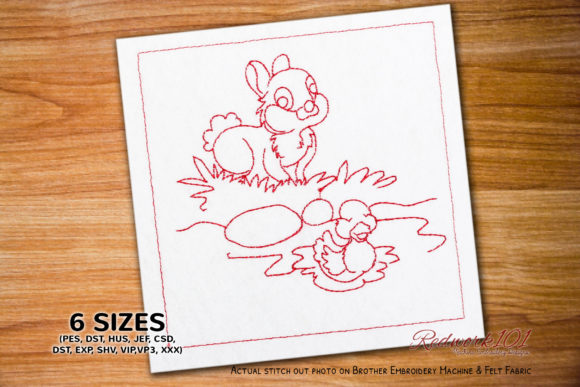
As an embroidery designer who’s stitched for over a dozen boutique brands—from Brooklyn-based knitwear labels to Pacific Northwest farm-to-closet apparel lines—I opened Bunny with Duck Design expecting sweetness. What I found was something more intentional: a quiet narrative stitched in thread. The composition balances soft curves and gentle negative space—neither overly detailed nor minimalist to the point of abstraction. It reads as playful but not childish, cute but not cloying, and carries a subtle rustic warmth that aligns beautifully with the Farm Animals category without leaning into cartoon cliché.
How It Lives on Real Sweatshirts
This isn’t just a design—it’s a placement-ready story. On a neutral heather grey sweatshirt? It breathes. The bunny’s ear and duck’s beak create natural focal points that catch light without demanding attention. On charcoal or navy fabric, the contrast works best with warm-toned thread—think oatmeal, terracotta, or moss green—giving the piece grounded, earthy sophistication. Pastel sweatshirts (blush, sky blue, buttercream) let the design shine with delicate clarity—ideal for spring drops or baby-knit collaborations.
Oversized hoodies? Yes—especially chest-placed. The scale holds up without distortion, and the gentle contours soften the boxiness of relaxed silhouettes. For sleeve accents or back panels, Bunny with Duck Design scales gracefully: its clean outer shape (and optional Box Stitch framing) gives structure without rigidity. That Box Stitch note matters—it’s not decorative fluff. When used intentionally, it adds polish; when skipped, the design feels airier, more handmade. Either choice supports brand voice: structured minimalism or soft authenticity.
Design Personality & Brand Alignment
Bunny with Duck Design lands firmly in the playful-feminine-rustic sweet spot—a rare trifecta for small shops. It avoids the hyper-saturated energy of mass-market animal motifs while staying far from sterile minimalism. For a boutique brand building lifestyle storytelling—think “slow mornings, backyard gardens, hand-stitched heirlooms”—this design becomes visual shorthand. It doesn’t shout “cute!” It whispers “I made this with care.” That nuance builds buyer trust faster than any product description.
On Etsy listings or Instagram mockups, it photographs exceptionally well: no busy background needed. A single stitch line on a draped hoodie cuff reads clearly. A chest placement against linen-textured fabric reads premium—even before you see the tagline. That’s the power of intentional embroidery rhythm: low stitch density where it counts (the duck’s wing, the bunny’s cheek), slightly denser along shared outlines to anchor the composition. It feels designed for fabric, not just digitized onto it.
Practical Embroidery Considerations
Let’s talk real production—not theory. As a working embroiderer, I checked three things first: thread color contrast, stitch density, and hoop size implications.
- Thread colors: The design invites thoughtful palette pairing. Avoid stark black-on-black or white-on-cream unless your brand leans into high-contrast modernism. Instead, lean into tonal layering—e.g., duck in pale sage, bunny in warm oat, outline in soft taupe. This elevates perceived value and reinforces handmade integrity.
- Stitch density: Judging by layout cues, this is not a fill-heavy file. That’s smart for sweatshirt embroidery—less risk of puckering on thick fleece, better drape retention, and easier stabilizer management. Still, always test on your exact fabric blend: 80/20 cotton-poly behaves differently than 100% organic ringspun.
- Stabilizer & fabric texture: Medium-weight cutaway or tear-away works best here. Skip fusible web—it adds stiffness where softness matters. And yes—always pre-shrink your blanks. Nothing undermines “premium” like a distorted bunny after wash #1.
Small-size readability? Solid. At 3.5” wide (a common chest placement), key features—the duck’s curved beak, the bunny’s perked ear—remain legible. No micro-detail traps. That means fewer re-hooping passes, less thread breakage, and smoother commercial embroidery throughput—even for shops running dual-head machines.
Why This Design Strengthens Your Boutique Brand
For Etsy sellers and small shop owners, every design asset must pull double duty: look beautiful *and* communicate brand values at a glance. Bunny with Duck Design does both. Its gentle asymmetry says “hand-drawn,” not algorithm-generated. Its lack of aggressive outlines says “thoughtful,” not transactional. When customers see it stitched on a cozy seasonal hoodie—paired with handwritten care tags or compostable packaging—it completes a cohesive handmade product ecosystem.
It also performs quietly in digital spaces. On a printable mockup or Shopify banner, it reads clearly at thumbnail size. No need for bold captions or arrows—it draws the eye naturally. That’s invaluable for scroll-driven discovery. And because it sits comfortably across age groups (kids’ sizes through adult unisex), it expands your audience without diluting identity.
A Final Note for Commercial Use
Before stitching your first production run: verify the digital embroidery file includes clear guidance on the Box Stitch option—and whether the outer box is part of the core design or purely ornamental. Also confirm hoop size compatibility with your machine setup. While the description notes “The Box Stitch shown in the picture is optional,” the execution affects thread count, stabilizer needs, and final texture. Small details like these separate a charming experiment from a trusted custom apparel staple.
Bottom line? Bunny with Duck Design isn’t just another machine embroidery design. It’s a quiet collaborator—supporting your voice, honoring your fabric choices, and inviting customers into a world where farm animals aren’t props, but gentle companions in everyday life. For small creative businesses building meaning, not just margins, that kind of intention is everything.