Girl Wearing Clown Hat
A Craft Fair Designer’s First Look: Bold, Playful, and Instantly Memorable
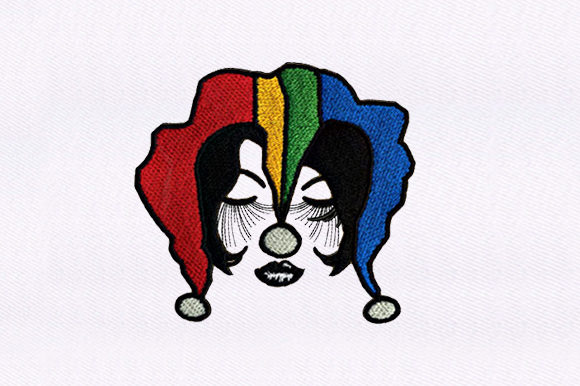
As someone who’s stitched hundreds of designs for weekend craft fairs, Etsy shops, and boutique wholesale lines, my first impression of Girl Wearing Clown Hat is immediate: it’s bold without being loud, whimsical without tipping into kitsch, and undeniably circus-inspired in the best possible way. It doesn’t read as vintage or retro—it feels modern, confident, and full of personality. That’s gold at a handmade market, where customers scroll past dozens of items in under three seconds. This isn’t farmhouse charm or minimalist elegance—it’s joyful, expressive, and unapologetically fun. And that energy translates directly into booth traffic.
Where Girl Wearing Clown Hat Shines on Real Craft Fair Products
This machine embroidery design performs strongest when placed where it can command attention—but also breathe. On a natural canvas tote bag (medium size, front-center), it lands with charisma: large enough to read from six feet away, detailed enough to invite closer inspection. As an apron embroidery, it works beautifully above the pocket—playful but not distracting during cooking demos or vendor chats. For tea towel embroidery, I recommend placing it low on the hem or corner; the contrast between domestic softness and circus flair creates instant visual intrigue.
An embroidered patch version? Absolutely. With clean edges and strong silhouette, Girl Wearing Clown Hat holds up beautifully when cut, fused, and ironed onto denim jackets or backpacks—ideal for teens and creative adults browsing handmade markets. On small fabric pouches or pillow covers, it scales well as a focal point—not too dense, not overly delicate. And for caps? Yes—but only on structured, medium-crown styles with smooth front panels. Avoid curved or low-profile caps unless you’ve tested stitch placement thoroughly.
What Makes This Design Sell—And What Requires Care
Girl Wearing Clown Hat succeeds because it’s instantly legible. The hat dominates the composition, the girl’s expression reads clearly even at 3”, and the overall shape fits comfortably within standard hoop sizes. That means faster hooping, fewer re-hoops during batch production, and more consistent results across your handmade product line. It photographs exceptionally well for Etsy seller listings—especially against light linen, cream cotton, or muted denim. The contrast between character and background gives depth without needing filters.
But here’s where attention matters: review the stitch density before mass production. If the clown hat includes tightly packed satin stitches or fine facial features, test on your target fabric texture—especially thick canvas, terry cloth towels, or textured tea towels. Dense areas may flatten or blur. Likewise, avoid using this design smaller than 2.5” on dark fabric unless thread colors are high-contrast (e.g., bright yellow or white thread on navy). Tiny details—like eyelashes or hat trim—can vanish if scaled down or stitched on unstable surfaces.
Booth Impact, Brand Alignment, and Customer Connection
At a craft fair, Girl Wearing Clown Hat draws smiles—and that’s your opening. It invites conversation (“Is that your kid?” “Did you design that?” “Where’s the rest of the circus set?”). That engagement builds trust and increases basket size. When paired with complementary pieces—a matching embroidered market bag, a set of circus-themed tea towels, or a stack of patches—you’re not selling one item. You’re offering a mood, a story, a shared laugh.
For small shop owners building brand consistency, this design fits cleanly into a playful-but-polished aesthetic. It doesn’t clash with botanical prints or neutral palettes—it adds contrast and warmth. Used across multiple product types (tote bag design, pillow cover, finished product gifting), it strengthens recognition without feeling repetitive. Just be intentional: vary thread colors (rust + mustard, blush + charcoal, cobalt + cream) to keep each piece fresh.
Practical Embroidery Designer Notes Before You Stitch
- Always test the design on scrap fabric that matches your final product—same weight, weave, and dye lot.
- Check thread colors against your fabric swatches in natural light. What looks vibrant on screen may mute on oat linen or heavyweight canvas.
- Review spacing and stitch order—if the face stitches before the hat, stabilizer shifting could distort proportions.
- Confirm hoop size compatibility with your machine and intended products. A 5x7” hoop works for most placements, but double-check file dimensions.
- Inspect stitch density in critical zones—especially around eyes, hat brim, and hairline. Over-stitching causes puckering; under-stitching loses definition.
- Use the right stabilizer: cutaway for stretchy knits, tear-away for stable wovens, and heavy cutaway + topping for textured towels.
- Create at least one real mockup—not just a printable mockup—to assess drape, scale, and tactile appeal.
- Compare how the design reads across fabric colors. Light threads on dark fabric need tighter tension and possibly slower speed.
- Verify commercial embroidery rights before selling finished products. This digital embroidery file comes with multiple formats and broad compatibility—but confirm licensing terms before listing on Etsy or wholesaling.
Final Thought: A Reliable, Expressive Workhorse for Creative Entrepreneurs
Girl Wearing Clown Hat isn’t just another embroidery file. It’s a versatile, emotionally resonant asset—one that balances artistic integrity with craft fair practicality. It works for Cricut users adding iron-on accents, for embroidery business owners scaling production, and for Etsy sellers curating giftable, Instagram-ready collections. It elevates a plain tote into a statement piece, turns a kitchen towel into a conversation starter, and transforms a simple cap into wearable joy. In short: it sells. Not because it’s trendy—but because it feels human, handmade, and full of heart. Just remember: respect the details, test early, and let its personality shine through your craftsmanship.