Composting Red Worm Lineart Design Review
As an experienced embroidery designer who has spent years refining designs for small business merchandise, I approach every new digital file with a critical eye. When evaluating Composting Red Worm Lineart, my focus shifts immediately from artistic appreciation to practical application. This isn't just about how the design looks on a screen; it is about how it translates into a tangible product that represents a brand's identity. For small business owners, Etsy sellers, and apparel decorators, choosing the right machine embroidery design can be the difference between a generic souvenir and a premium branded asset.
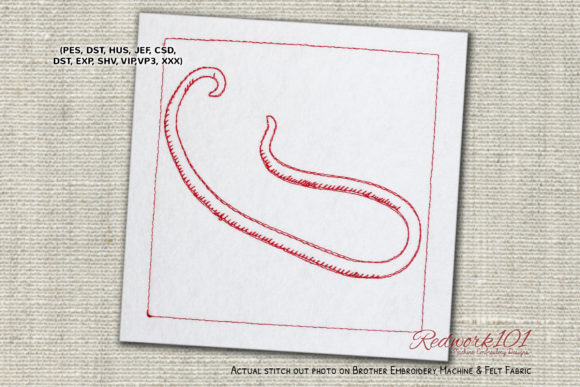
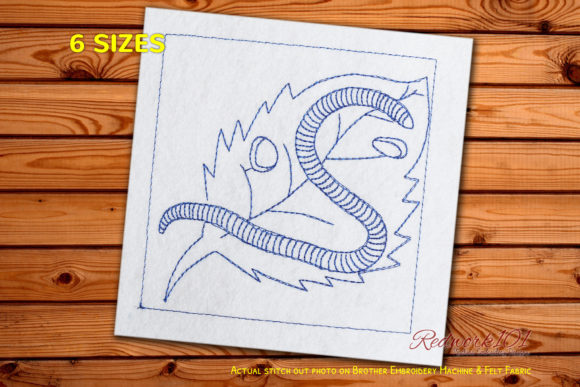
The first impression of Composting Red Worm Lineart is one of clean, functional simplicity. The title suggests a connection to nature, sustainability, and perhaps a touch of rustic charm. In the context of Bugs as a category, this lineart style offers a distinct advantage over complex, shaded illustrations. It feels modern yet approachable, making it ideal for businesses that want to project an image of eco-friendliness or artisanal craftsmanship without appearing cluttered. Whether you are running a local café, a boutique, a handmade shop, or a creative studio, this design possesses the versatility to serve as a subtle accent or a bold statement piece.
Real-World Application for Small Business Merch
In my professional experience, the true test of any embroidery file is its performance across various mediums. Composting Red Worm Lineart shines particularly well when adapted for embroidered patches. The lineart style ensures that even at smaller sizes, the details remain crisp and legible. Imagine this design stitched onto a high-quality felt patch for a staff uniform at an organic bakery or a florist shop. It serves as a perfect visual cue for customers looking for sustainable practices, instantly building trust and recognition.
For custom apparel, this design is equally compelling. I have seen similar lineart styles used effectively on chest logos for work shirts and apron embroidery. The clean lines allow the design to sit comfortably on curved surfaces like cap fronts or the sleeves of tote bag designs. A small business selling composting kits could use this as a branded product add-on, stitching it directly onto the packaging or a included tote bag. The optional box stitch mentioned in the description adds a layer of flexibility; if your brand prefers a minimalist look, skipping the box keeps the focus entirely on the worm, creating a more sophisticated aesthetic.
When considering commercial embroidery projects for event merch or craft business assets, the adaptability of Composting Red Worm Lineart becomes a significant asset. It works seamlessly as a logo accent on hats for community garden events or as a decorative element on customer gifts. The design does not demand attention through heavy shading but rather invites it through clarity and precision. This subtlety often elevates the perceived value of the finished product, signaling to the buyer that the business cares about quality details.
Strategic Considerations for Production
While the design is promising, a professional review must address where caution is required. Not every fabric texture or hoop size will yield the same results. When planning to use this digital embroidery file for small patch sizes, it is crucial to inspect the spacing of the lines. If the design is scaled down too much, the fine details of the worm may become lost or merge together, especially if the thread colors lack sufficient contrast.
Curved surfaces present another challenge. While caps and rounded tote bags are popular choices, the distortion inherent in these shapes requires careful digitizing. If the original file was not optimized for curvature, the lines might appear wavy or stretched. Furthermore, high stitch density can be a concern with lineart if the underlying structure is too tight. On textured fabrics, such as heavy canvas or bouclé, the definition of the design may soften. In these cases, using the proper stabilizer is non-negotiable to ensure the stitches lay flat and maintain their shape.
Dark uniforms also require special attention. Light-colored lineart on dark backgrounds can sometimes struggle with coverage unless a dense underlay is used. Conversely, if the design relies on thin outlines, they might get swallowed by the fabric weave. It is always advisable to test the design on the actual material before committing to a large production run. This step prevents costly errors and ensures that the final product meets the high standards expected by your clientele.
Building Brand Identity Through Embroidery
The choice of design elements directly impacts brand identity, customer trust, and visual consistency. Composting Red Worm Lineart aligns perfectly with brands that value transparency, nature, and handcrafted quality. By incorporating this design into your handmade product line, you reinforce a narrative of care and sustainability. Customers are increasingly drawn to businesses that demonstrate attention to detail, and high-quality embroidery is a tangible proof of that commitment.
However, to achieve this level of professionalism, you must verify specific technical details before production. The product description notes that the outer box color varies and can be skipped, which is excellent for customization. Yet, it is vital to confirm the exact stitch count, file format, and recommended hoop size from the provider. These specifications dictate how the design will behave during the stitching process. Without knowing the optimal hoop size, you risk misalignment or unnecessary trimming of the design edges.
Thread color selection plays a pivotal role in the success of the project. I recommend testing the design in black and white first to evaluate the contrast and balance of the lines. Once the structure is confirmed, experiment with thread colors that complement your brand palette. Ensure there is enough contrast between the thread and the fabric to maintain readability. Additionally, creating a printable mockup for client approval allows stakeholders to visualize the final result on different items, such as aprons, caps, or tote bags, before a single stitch is made.
Final Designer Notes for Commercial Use
Before integrating Composting Red Worm Lineart into your inventory, compare it beside other design assets to ensure visual consistency. Does it match the weight and style of your existing logos? Is it scalable enough for both large promotional banners and tiny product labels? Confirming commercial licensing is also essential to protect your business from legal issues. You need the right to reproduce the design on merchandise for sale without infringement.
Ultimately, Composting Red Worm Lineart offers a versatile foundation for small business branding. Its clean aesthetic makes it suitable for a wide range of applications, from staff uniforms to customer gifts. By following rigorous testing protocols—checking stabilizers, fabric textures, and thread contrasts—you can transform this digital file into a powerful tool for engagement. Whether you are an Etsy seller looking to elevate your shop or a decorator managing corporate accounts, this design provides the flexibility needed to create memorable, high-value embroidered products that resonate with your audience.