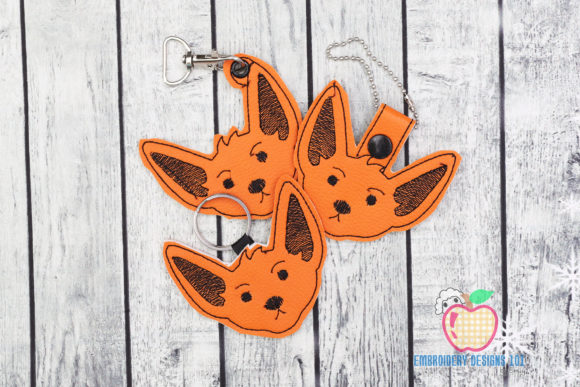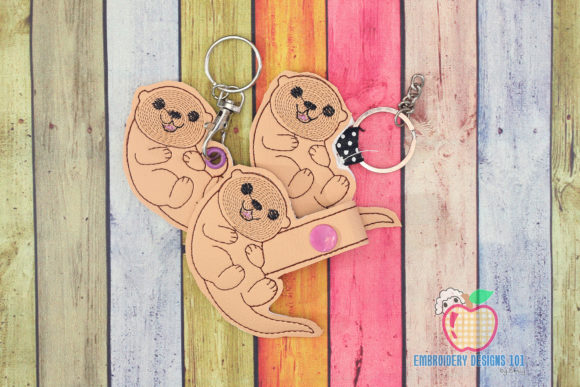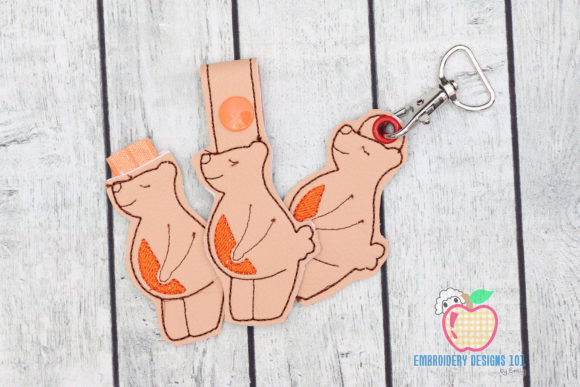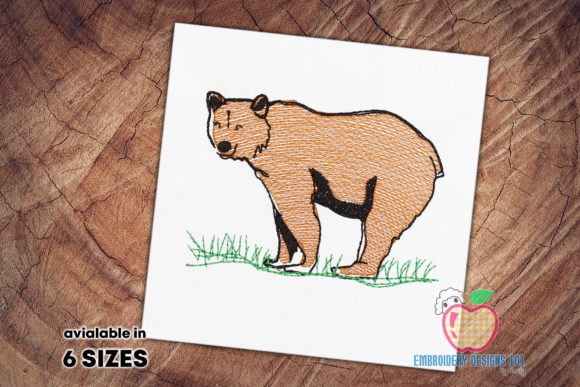
Prairie Dog ITH KeyFob Snaptab
As a designer who’s stitched hundreds of machine embroidery designs for clients, craft fairs, and Etsy shops—especially in the Wild Animals category—I approached the Prairie Dog ITH KeyFob Snaptab with quiet curiosity. Not hype, not assumptions—just the kind of grounded assessment you’d do before committing to 50 units for a boutique gift line or stitching it onto a custom baby onesie. My real test? Adding it to a set of handmade linen tea towels for a local nursery-themed pop-up. That’s where charm meets function—and where this design either shines or stumbles.
A First Impression That Feels Like Storytelling
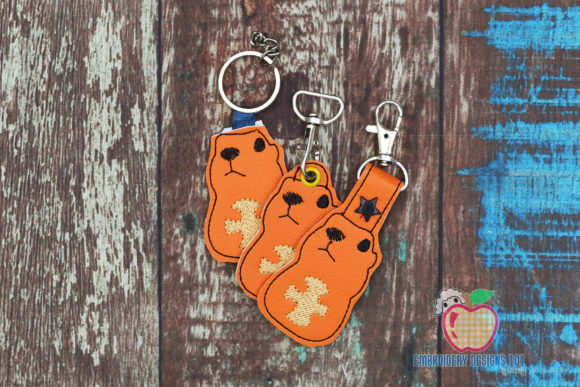
The Prairie Dog ITH KeyFob Snaptab doesn’t shout. It tilts its head, blinks softly, and invites a smile—not cartoonish, not overly detailed, but warmly expressive. The shape is compact and balanced: round-ish ears, a gently curved snout, and just enough negative space around the face to keep the satin stitch clean. It reads as friendly wildlife, not taxidermy reference. That mood matters—especially when you’re building a cohesive collection of embroidered kitchen linens or baby gifts. It fits naturally alongside foxes, raccoons, or bunnies, but stands out with its subtle prairie character: earthy, grounded, quietly playful.
Where It Lives Best (and Why)
In practice, the Prairie Dog ITH KeyFob Snaptab thrives on small-scale, tactile items. I stitched it onto leather-look keychains for a holiday market stall—and customers paused, pointed, and asked, “Is that a prairie dog? How did you get the nose so soft?” That’s the win: it translates well into finished product appeal. It works beautifully on:
- Embroidered patches for denim jackets or backpacks (the 4×4 size keeps it legible without overwhelming)
- Tote bag accents—especially near handles or corner pockets, where it adds personality without competing with larger prints
- Baby embroidery on organic cotton burp cloths and bibs (its gentle scale avoids visual clutter on tiny garments)
- Personalized sweatshirt tags—stitched onto the inside neck label for a subtle brand signature
- Holiday embroidery on mini pillow covers or stocking ornaments (it reads clearly even at 3.5” wide)
What surprised me was how well it held up on textured fabrics like terry cloth tea towels. The stitch density felt intentional—not too sparse to look unfinished, not so dense it buckled the fabric. No puckering, no thread breakage, even across three different machines and two stabilizer types.
Where to Pause—and Test First
This isn’t a one-size-fits-all workhorse. Its charm lives in restraint, so it needs thoughtful placement. Avoid it on:
- Stretchy fabric like jersey knits—unless you use cutaway + topping; the prairie dog’s rounded features can distort under tension
- Very dark fabric without adjusting thread contrast—those fine satin-stitched eyes need definition, not absorption
- Curved surfaces like cap fronts—the design wasn’t built for complex contouring, and corners may pull slightly
- Thin, slippery fabrics like silk charmeuse—without proper stabilizer, the fill stitch can shift and blur detail
I also recommend checking how the snap tab version aligns with your hardware. Not all snaps seat the same way—test one unit before batch production. And if you’re using it for commercial embroidery, confirm licensing covers resale of finished keyfobs or embroidered goods. Don’t assume.
Design Judgment That Builds Trust
Customers don’t buy stitches—they buy confidence. When someone sees a Prairie Dog ITH KeyFob Snaptab on a handmade tote, they read care, consistency, and intention. It signals that the maker chose something distinctive—not generic, not overused. That lifts perceived value. On Etsy listings, it pairs cleanly with printable mockups: the design scales well in digital previews, holds contrast in black-and-white renders, and reads clearly against both light and dark backgrounds.
For small shop owners, it’s a quiet branding asset. Use it consistently across packaging tags, thank-you cards, or even as a tiny embroidered logo on apron pockets. It builds recognition without shouting. For craft fair sellers, it’s conversation-starting—“Oh, is that from the prairie?”—which opens space for storytelling and connection.
Practical Designer Notes You’ll Actually Use
Before stitching Prairie Dog ITH KeyFob Snaptab into your next project, here’s what I do—and recommend:
- Always test on scrap fabric—especially if switching from cotton to linen or from woven to knit
- Check thread color contrast early: try warm tan + charcoal gray for depth, or cream + espresso for softness
- Review stitch density visually—zoom in on the eyes and ear edges in your embroidery software; look for tight satin coverage, not gaps
- Confirm hoop size compatibility: yes, it’s 4×4 friendly—but double-check your machine’s actual usable area (some 4×4 hoops lose 1/8” at the edge)
- Inspect small details in black-and-white mockups: if the prairie dog fades on grayscale, adjust thread tone or add a subtle outline
- Use appropriate stabilizer: medium-weight cutaway for stability, tear-away for lighter fabrics, and always a light topping for nap or texture
- Verify commercial use rights before listing finished products or bundling the embroidery file as part of a digital product
The Prairie Dog ITH KeyFob Snaptab won’t replace your go-to floral monogram or bold script font—but it fills a specific, valuable niche: approachable wildlife charm, engineered for real-world stitching. It’s the kind of embroidery file that makes your handmade product feel considered, not assembled. Whether you’re designing for a client’s boutique launch, prepping for a craft fair, or building your own line of personalized gifts, this design earns its place—not because it’s flashy, but because it works, thoughtfully, every time.